
-
E-mail:
18333041899@163.com -
Tel:
86-18333041899
E-mail:
18333041899@163.comTel:
86-18333041899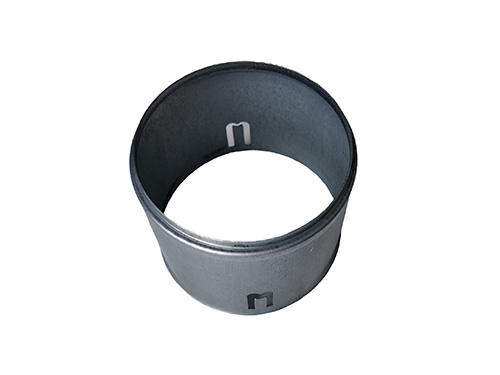
Stamping processing, also known as metal stamping, is a advanced cold-forming manufacturing technology that shapes or processes metal sheets, coils, or strips using precision dies and mechanical/hydraulic presses. Operating at room temperature, this process applies high pressure to achieve plastic deformation or material separation, producing high-precision, consistent components—making it a cornerstone of mass production in automotive, electronics, aerospace, and consumer goods industries worldwide.
I. Core Working Principles & Technical Characteristics
1. Fundamental Mechanism
Stamping processing relies on the mechanical force generated by presses (ranging from 10 to 3000 tons) to drive custom-engineered dies (punch and die sets) into contact with metal workpieces. The metal undergoes controlled plastic deformation (without material removal) or shearing (material separation) under pressure, forming the desired geometric shapes, holes, or functional features. As a cold-working process, it avoids thermal damage to materials, preserving their inherent mechanical properties while enhancing structural integrity.
2. Key Technical Indicators
Processing Tolerance: Dimensional accuracy ranges from ±0.01mm to ±0.1mm, with positional tolerance as low as ±0.02mm for precision components, enabled by high-precision die manufacturing (CNC machining + EDM wire cutting).
Production Efficiency: Cycle speeds vary from 50 to 1000 strokes per minute—mechanical presses excel at high-speed production (300–1000 SPM) for simple parts, while hydraulic/servo presses offer slower, controlled force (10–50 SPM) for complex forming.
Material Thickness Range: Compatible with metal sheets/coils of 0.05mm to 6mm in thickness; specialized heavy-duty stamping can process materials up to 12mm thick (e.g., automotive chassis parts).
Material Utilization: Optimized die design minimizes waste, with utilization rates typically 85–90% for standard parts and 70–80% for complex geometries, significantly reducing material costs.
II. Core Processing Categories & Applications
Stamping processing integrates multiple sub-processes, often combined in sequential or simultaneous operations to produce finished parts:
1. Separation Processes (Material Cutting)
Blanking: Cutting flat metal sheets/coils into initial blanks (e.g., circles, rectangles) for subsequent forming. Applications: Raw material preparation for washers, brackets, and automotive components.
Punching: Creating holes, slots, notches, or cutouts using punch-die pairs, with hole diameters as small as 0.5mm. Applications: Electrical connector holes, pipe flanges, and chassis mounting points.
Trimming & Deburring: Removing excess material or burrs from formed parts to refine edges and ensure assembly compatibility. Applications: Deep-drawn housings, bent brackets, and stamped gears.
Piercing: Specialized punching for thick or hard metals (e.g., stainless steel, alloy steel) to create precision holes for fasteners or fluid channels. Applications: Aircraft fasteners, industrial valve components.
2. Forming Processes (Material Deformation)
Bending: Forming metal into angles (90°/180°), curves, U-shapes, or V-shapes using adjustable bending dies, with minimum bend radius as small as 0.5× material thickness. Applications: Brackets, clips, door frames, and automotive body panels.
Deep Drawing: Transforming flat blanks into hollow components (shallow drawing: depth ≤ diameter; deep drawing: depth > diameter) by pulling metal through a die with a punch. Applications: Cans, cookware, automotive fuel tanks, and electronic device casings.
Flanging: Forming raised edges on holes or part perimeters to enhance structural strength, facilitate welding/assembly, or prevent sharp edges. Applications: Pipe connections, sheet metal enclosures, and automotive wheel arches.
Embossing & Coining: Embossing adds raised/recessed patterns (logos, texture, reinforcing ribs) for aesthetics or functionality; coining applies high pressure (1000–3000 MPa) to create fine details (threads, gears) with tight tolerances. Applications: Anti-slip tool surfaces, decorative panels, and precision hardware.
3. Composite & Automated Processes
Progressive Die Stamping: Integrates 5–20 processes (blanking, punching, bending, forming) into a single die set, with the workpiece moving through sequential stations via automated feeding. Ideal for high-volume production (100k–10M parts/year) of small, complex components (e.g., electrical terminals, battery contacts).
Transfer Die Stamping: Uses robotic arms to transfer workpieces between separate dies for large or heavy components (e.g., automotive body panels, aerospace structural parts) requiring multi-step forming.
Tandem Stamping: Links multiple presses in a production line for ultra-high-volume manufacturing (e.g., automotive body-in-white parts), with automated material handling and process monitoring.