
-
E-mail:
18333041899@163.com -
Tel:
86-18333041899
E-mail:
18333041899@163.comTel:
86-18333041899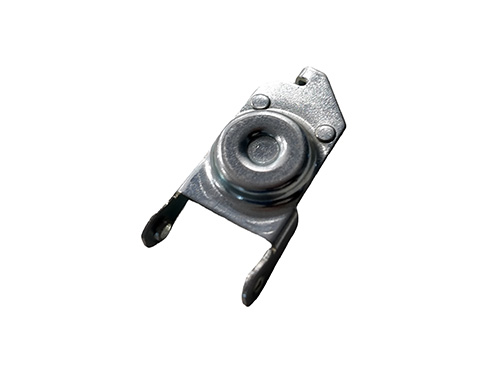
Stamping processing(also known as metal stamping)is a high-efficiency cold-forming manufacturing technology that shapes or processes metal sheets,coils,or strips using precision dies and hydraulic/mechanical presses.By applying high pressure to deform,cut,or form metal materials without heating(or with minimal heat),the process produces consistent,complex components with tight tolerances—making it a cornerstone of mass production across automotive,electronics,aerospace,and consumer goods industries.Below is a comprehensive overview of stamping processing,tailored for technical manuals,B2B manufacturing guides,or industry documentation:
1.Core Principles&Process Advantages
1.1 Working Principle
Stamping relies on the mechanical force of presses(ranging from 10–3000 tons)to drive custom-designed dies(punch and die sets)into contact with metal workpieces.The metal undergoes plastic deformation or shearing under pressure,forming the desired shape,holes,or features.As a cold-forming process(operated at room temperature),it preserves the material’s mechanical properties while achieving high precision.
1.2 Key Advantages
High Efficiency:Fast production cycles(up to 1000 parts per minute for progressive stamping)enable mass production,reducing unit costs.
Precision&Consistency:Tight dimensional tolerances(±0.01–±0.1mm)and uniform part quality,ensured by high-precision dies and automated feeding systems.
Material Savings:Optimized die designs minimize material waste(typically 5–15%waste rate),especially for coil-fed continuous production.
Enhanced Material Performance:Cold working increases metal density,tensile strength,and hardness(10–30%improvement vs.hot-forming),improving component durability.
Versatility:Capable of processing thin to medium-thickness metals(0.05–6mm)and producing complex shapes(e.g.,nested structures,multi-functional features)that are difficult to achieve with machining or casting.
Automation Compatibility:Integrates with robotic feeding,inspection,and packaging systems,reducing labor costs and human error.
2.Common Stamping Processes&Applications
Stamping processing encompasses multiple sub-processes,often combined to produce finished parts:
2.1 Cutting Processes(Material Separation)
Blanking:Cutting flat metal sheets/coils into basic blanks(e.g.,circles,rectangles)for further processing.Applications:Raw blanks for brackets,washers,or automotive components.
Punching:Creating holes,slots,notches,or cutouts in the workpiece using punch-die sets.Applications:Electrical connectors,pipe flanges,or chassis holes.
Trimming:Removing excess material from formed parts to refine edges or dimensions.Applications:Deep-drawn components(e.g.,cans,fuel tanks)or bent parts.
Piercing:Creating small,precise holes(often for fasteners)in thick or hard metals.Applications:Aircraft fasteners,instrument panels.
2.2 Forming Processes(Material Deformation)
Bending:Forming metal into angles(90°/180°),curves,U-shapes,or V-shapes using bending dies.Applications:Brackets,clips,door frames,or automotive body parts.
Drawing:Transforming flat blanks into hollow components(shallow or deep)by pulling metal through a die.Applications:Cans,cookware,automotive fuel tanks,or electronic enclosures.
Embossing:Adding raised or recessed patterns(logos,texture,or strengthening ribs)for aesthetic or functional purposes.Applications:Anti-slip surfaces(tools,pedals),decorative panels,or structural reinforcements.
Coining:Applying high pressure to shape metal with fine details or tight tolerances(e.g.,threads,gears).Applications:Precision hardware,gears,or medical device components.
Flanging:Forming raised edges on holes or part perimeters to enhance strength or facilitate assembly.Applications:Pipe connections,sheet metal enclosures.
2.3 Combined Processes
Progressive Stamping:Integrating multiple processes(blanking,punching,bending,drawing)into a single die set,with the workpiece moving through sequential stations.Applications:High-volume parts(e.g.,electrical terminals,automotive clips)with complex features.
Transfer Stamping:Moving workpieces between separate dies(via robotic arms)for large or complex parts requiring multiple forming steps.Applications:Automotive body panels,aerospace structural components.
3.Key Equipment&Tooling
3.1 Stamping Presses
Mechanical Presses:High-speed(100–1000 strokes per minute),suitable for high-volume,simple-to-medium complexity parts(e.g.,washers,brackets).
Hydraulic Presses:Slow-speed(10–50 strokes per minute),high force output,ideal for deep drawing,coining,or thick-metal stamping(e.g.,automotive chassis parts).
Servo Presses:Precision-controlled speed and force,combining the advantages of mechanical and hydraulic presses—suitable for complex,high-precision parts(e.g.,electronics,medical devices).
3.2 Dies&Tooling
Die Sets:Consist of upper(punch)and lower(die)components,custom-designed to the part’s shape.Materials include tool steel(Cr12MoV),carbide,or HSS(high-speed steel)for durability.
Auxiliary Tooling:Feeding systems(coil feeders,sheet feeders),lubrication systems(to reduce die wear and material adhesion),and ejection mechanisms(to remove finished parts).
4.Materials Suitable for Stamping
Stamping processes require materials with good ductility,formability,and tensile strength:
Steel:Carbon steel(Q235,1018),stainless steel(304,316),galvanized steel,spring steel(65Mn),and galvannealed steel(automotive applications).
Aluminum Alloys:6061(high strength),5052(excellent formability),3003(lightweight,corrosion-resistant)—used in electronics,aerospace,and automotive trim.
Copper/Brass:Pure copper(C11000),brass(C26000)—ideal for electrical connectors,terminals,and plumbing fittings(excellent conductivity and ductility).
Special Alloys:Titanium(aerospace),nickel alloys(high-temperature applications),and magnesium alloys(lightweight structural parts).
5.Quality Control&Process Standards
Dimensional Inspection:Coordinate Measuring Machines(CMM),optical comparators,digital calipers,and gauge pins verify tolerances and shape accuracy.
Material Testing:Tensile tests(verify strength),hardness tests(Rockwell/Brinell),and corrosion resistance tests(salt spray for stainless steel)ensure material compliance.
Surface Quality Checks:Visual inspection,automated optical systems,or touch tests detect scratches,burrs,deformations,or coating defects.
Process Monitoring:Real-time monitoring of press force,stroke speed,and die wear to prevent defects(e.g.,using load cells or laser sensors).
Compliance Standards:ISO 9001(quality management),IATF 16949(automotive),ASTM(material specifications),and AS9100(aerospace)for industry-specific requirements.
6.Key Considerations for Stamping Projects
Part Design Optimization:Simplify complex features(e.g.,avoid sharp corners)to reduce die complexity and production costs;ensure adequate draft angles for forming.
Material Selection:Match material properties to application requirements(e.g.,stainless steel for corrosion resistance,aluminum for lightweight needs).
Die Design&Maintenance:Invest in high-quality die materials(e.g.,carbide for long runs)and regular maintenance(polishing,lubrication)to extend die life.
Process Parameters:Adjust press force,stroke speed,and lubrication based on material thickness and type(e.g.,higher force for thick steel,slower speed for deep drawing).
Post-Processing:Consider surface treatments(electroplating,powder coating,painting)to enhance corrosion resistance,aesthetics,or conductivity.
Stamping processing is a cost-effective,high-precision manufacturing solution for mass-produced metal components.By leveraging advanced dies,automated equipment,and strict quality control,manufacturers can deliver consistent,durable parts that meet the demands of modern industries—from automotive and electronics to aerospace and consumer goods.Partnering with experienced stamping suppliers ensures optimal process design,material selection,and cost efficiency for custom projects.