
-
E-mail:
18333041899@163.com -
Tel:
86-18333041899
E-mail:
18333041899@163.comTel:
86-18333041899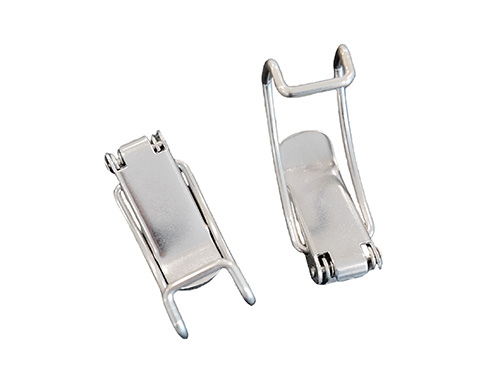
Metal stamping parts are high-precision components produced through metal stamping—a cold-forming process that shapes metal sheets(or coils)using dies and presses.By applying pressure to deform or cut metal materials(e.g.,steel,aluminum,copper),this process creates consistent,complex shapes with tight tolerances,making stamping parts indispensable in automotive,electronics,aerospace,and consumer goods industries.Below is a comprehensive guide to metal stamping parts,tailored for technical manuals,B2B sales materials,or manufacturing documentation:
1.Core Production Process&Techniques
Metal stamping integrates multiple sub-processes to achieve desired shapes and functionalities,with automation-friendly operations suitable for mass production:
Blanking:Cutting flat metal sheets into basic shapes(e.g.,circles,rectangles)as raw blanks for further processing.
Punching:Creating holes,slots,or notches in the metal using punch-die sets(e.g.,holes in electrical connectors).
Bending:Forming metal into angles,curves,or U-shapes(e.g.,brackets,clips)with precision bending dies.
Drawing:Transforming flat blanks into hollow components(e.g.,cans,automotive fuel tanks)using deep-drawing dies.
Embossing:Adding raised or recessed patterns(e.g.,logos,texture)for aesthetic or functional purposes(e.g.,anti-slip surfaces).
Coining:Applying high pressure to shape metal with fine details(e.g.,gears,precision hardware)for tight tolerance requirements.
Progressive Stamping:Combining multiple processes(blanking,punching,bending)in a single die set,enabling continuous production of complex parts.
2.Common Materials for Metal Stamping
Materials are selected based on mechanical properties,corrosion resistance,and application requirements:
Steel:
Carbon Steel(Q235,1018):Cost-effective,high ductility,suitable for general-purpose parts(brackets,clips).
Stainless Steel(304,316):Corrosion-resistant,durable,ideal for food processing equipment,medical devices,or marine components.
Galvanized Steel:Zinc-coated for rust protection,used in automotive parts,electrical enclosures.
Aluminum Alloys(6061,5052):Lightweight,high formability,corrosion-resistant,suitable for electronics,aerospace components,and automotive trim.
Copper/Brass:Excellent electrical conductivity,ductility,used in connectors,terminals,and plumbing fittings.
Special Alloys:Titanium(high strength-to-weight ratio for aerospace),spring steel(elasticity for clips,washers),and galvannealed steel(weldable for automotive body parts).
3.Key Features&Advantages
Precision&Consistency:Tight dimensional tolerances(±0.01–±0.1mm)and uniform quality across mass-produced parts,ensured by high-precision dies.
Cost-Efficiency:Fast production cycles(up to 1000 parts per minute)and low material waste(due to optimized blanking designs),reducing unit costs for large batches.
High Strength:Cold-forming enhances material density and tensile strength(10–30%higher than machined parts),improving durability.
Versatility:Compatible with thin to medium-thickness metal sheets(0.05–6mm)and capable of producing complex shapes(e.g.,nested structures,multi-functional components)that are difficult to achieve with other processes.
Automation Compatibility:Integrates with robotic feeding,inspection,and packaging systems,supporting high-volume production with minimal labor.
4.Typical Applications
Metal stamping parts are ubiquitous in industrial and consumer products:
Automotive Industry:Body panels,brackets,hinges,fuel tank components,electrical connectors,and suspension parts.
Electronics&Electrical:Terminal blocks,battery contacts,heat sinks,chassis components,and circuit board brackets.
Aerospace:Precision fasteners,instrument housings,and lightweight structural parts(using aluminum/titanium alloys).
Consumer Goods:Kitchenware(stainless steel bowls,cutlery),hardware(screws,washers,clips),and appliance components(refrigerator door hinges,washing machine parts).
Medical Devices:Surgical instruments(stainless steel),implantable components(titanium),and diagnostic equipment parts.
Construction:Roofing clips,fasteners,and structural brackets(galvanized steel).
5.Quality Control&Standards
Dimensional Inspection:Use coordinate measuring machines(CMM),optical comparators,and calipers to verify tolerances and shape accuracy.
Material Testing:Tensile tests,hardness tests,and corrosion resistance tests(e.g.,salt spray tests for stainless steel parts)to ensure material compliance.
Surface Quality Checks:Visual inspection or automated optical systems to detect scratches,burrs,or deformations.
Compliance with Standards:Meet international standards such as ISO 9001(quality management),ASTM(material specifications),and automotive standards(IATF 16949)for industry-specific requirements.
6.Selection Considerations
Material Matching:Choose materials based on application environment(e.g.,stainless steel for corrosion resistance,aluminum for lightweight needs)and mechanical requirements(strength,flexibility).
Die Design:Collaborate with manufacturers to optimize die design for complex shapes,reducing production costs and improving part quality.
Tolerance Requirements:Specify clear tolerance ranges based on assembly needs(e.g.,tight tolerances for precision electronics,moderate tolerances for general hardware).
Surface Treatment:Select post-processing options(electroplating,painting,powder coating)to enhance corrosion resistance,aesthetics,or conductivity.
Metal stamping parts combine precision,efficiency,and durability to meet the demands of modern manufacturing.Whether for high-volume automotive components or custom precision parts,partnering with experienced stamping manufacturers ensures consistent quality and cost-effective production.