
-
E-mail:
18333041899@163.com -
Tel:
86-18333041899
E-mail:
18333041899@163.comTel:
86-18333041899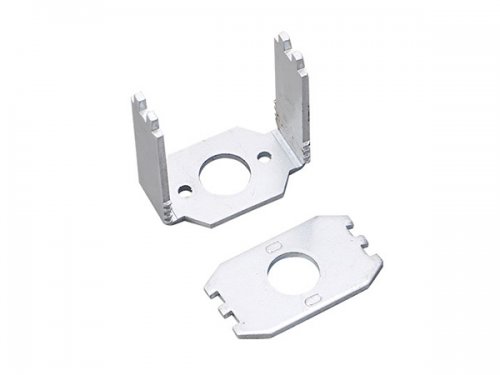
Bending parts rely on materials with excellent ductility,formability,and mechanical stability to withstand the bending process without cracking or excessive springback.The choice of material depends on application requirements such as strength,corrosion resistance,cost,and aesthetic appearance.Below are the most common materials for bending parts,categorized by type with key characteristics and typical applications:
1.Carbon Steel(Mild Steel)
Key Grades:Q235(A3),1018,1020
Core Properties:High ductility,good formability,low cost,and moderate strength.Low carbon content(≤0.25%)ensures excellent bendability without pre-heat treatment.Prone to rust if uncoated.
Bending Advantages:Minimal springback,easy to machine and weld,suitable for complex bends(e.g.,right angles,U-shapes).
Typical Applications:Structural brackets,chassis components,furniture frames,automotive body parts,and general industrial hardware.
2.Stainless Steel
Key Grades:304(A2),316(A4),430
Core Properties:
304/316:Corrosion-resistant(316 offers superior resistance to saltwater/chemicals),non-magnetic(304/316),good ductility,and aesthetic finish.
430:Ferromagnetic,lower cost than 304/316,moderate corrosion resistance.
Bending Considerations:Higher strength than carbon steel may require more bending force;avoid over-bending to prevent cracking.Thicker sheets may need annealing for tight bends.
Typical Applications:Food processing equipment,medical devices,marine components,kitchenware,architectural trim,and chemical industry parts.
3.Aluminum Alloys
Key Grades:6061,5052,3003
Core Properties:Lightweight(1/3 the density of steel),high corrosion resistance,excellent formability,and good thermal/electrical conductivity.5052 and 3003 are more ductile for bending;6061 offers higher strength after heat treatment.
Bending Advantages:Low springback,no rust,easy to finish(anodizing,painting).Ideal for weight-sensitive applications.
Typical Applications:Aerospace components,automotive trim,electronic enclosures,furniture,and decorative parts.
4.Copper&Copper Alloys(Brass,Bronze)
Key Materials:Pure copper(C11000),brass(C26000,C36000),bronze(C51000)
Core Properties:Exceptional ductility,high electrical/thermal conductivity,corrosion resistance,and attractive appearance(golden for brass,reddish for copper).
Bending Advantages:Can be bent into tight radii without cracking;suitable for precision parts.Brass is harder than pure copper but retains good formability.
Typical Applications:Electrical connectors,plumbing fittings,musical instruments,decorative hardware,and heat exchangers.
5.Galvanized Steel
Key Types:Hot-dip galvanized(HDG)steel,electro-galvanized steel
Core Properties:Carbon steel coated with a zinc layer for corrosion resistance.Retains the bendability of mild steel while adding rust protection.
Bending Considerations:Avoid excessive force that may damage the zinc coating(leading to rust);choose galvanized steel with a ductile coating for tight bends.
Typical Applications:Outdoor structures(fencing,sheds),automotive undercarriage parts,HVAC ducts,and agricultural equipment.
6.Cold-Rolled Steel(CR Steel)
Key Grades:SPCC,DC01,DC03
Core Properties:Smooth surface finish,uniform thickness,and higher ductility than hot-rolled steel.Produced by cold rolling(room temperature),resulting in better dimensional accuracy.
Bending Advantages:Ideal for parts requiring a clean,paint-ready surface;minimal surface defects,suitable for precision bending.
Typical Applications:Electronic enclosures,appliance shells,metal furniture,and decorative components.
7.Plastic Materials(For Non-Metal Bending Parts)
Key Types:Polypropylene(PP),Polyethylene(PE),Acrylonitrile Butadiene Styrene(ABS),Polyvinyl Chloride(PVC)
Core Properties:Lightweight,corrosion-resistant,low cost,and easy to thermoform(heat bending).PP/PE offer excellent flexibility;ABS/PVC provide better rigidity.
Bending Process:Typically heated to a specific temperature(e.g.,120–180°C)to soften the material,then bent and cooled to retain shape.
Typical Applications:Plastic enclosures,signage,automotive interior parts,and consumer product housings.
8.Titanium Alloys(High-End Applications)
Key Grades:Ti-6Al-4V
Core Properties:Ultra-high strength-to-weight ratio,excellent corrosion resistance,and biocompatibility.Ductile at room temperature but requires specialized bending equipment.
Bending Considerations:Higher cost;may need annealing for complex bends.Used in demanding environments.
Typical Applications:Aerospace components,medical implants,and high-performance industrial parts.