
-
E-mail:
18333041899@163.com -
Tel:
86-18333041899
E-mail:
18333041899@163.comTel:
86-18333041899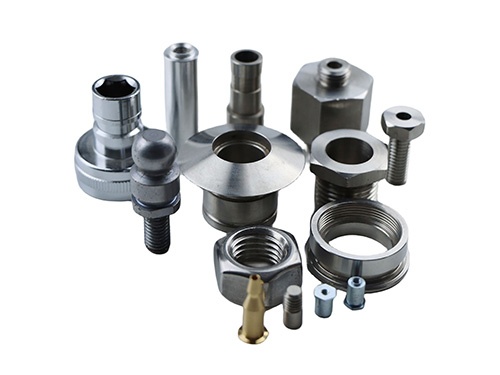
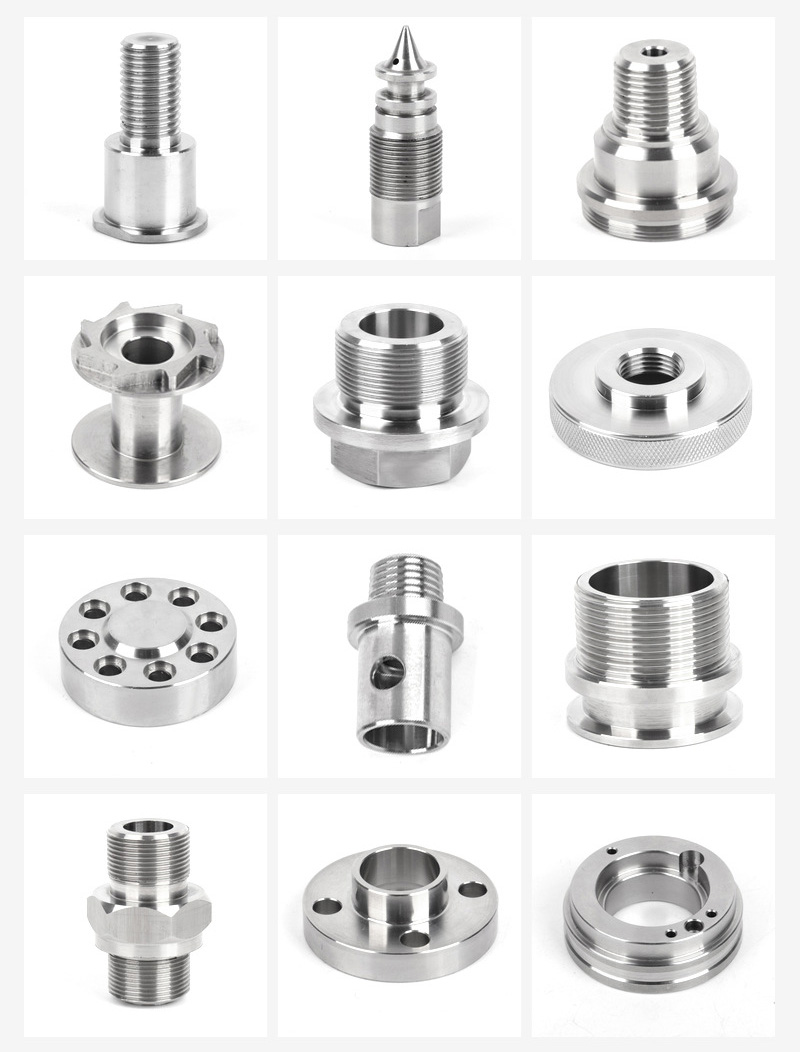
Machining parts refer to high-precision mechanical components produced through subtractive manufacturing processes—removing material from raw workpieces to achieve desired shapes, dimensions, and surface finishes. As the backbone of industrial production, these parts are integral to automotive, aerospace, electronics, medical devices, and energy equipment, requiring strict adherence to dimensional tolerances (down to ±0.001mm) and performance standards. This document comprehensively covers machining processes, material selection, component classification, quality control, and application scenarios, integrating the latest precision manufacturing technologies and industry best practices.
I. Core Definitions & Functional Requirements
1. What Are Machining Parts?
Machining parts are mechanical components fabricated via material removal processes, distinguishing them from additive (3D printing) or formative (casting, forging) manufacturing. Key characteristics include:
Precision Dimensional Control: Tolerances ranging from ±0.01mm (general industrial) to ±0.0001mm (ultra-precision applications like aerospace).
Customized Geometries: Complex shapes (e.g., internal cavities, threaded holes, curved surfaces) that cannot be easily achieved via other processes.
Controlled Surface Finishes: Surface roughness (Ra) from 0.02μm (polished) to 6.3μm (rough machining), tailored to functional needs (e.g., friction reduction, sealing).
Material Versatility: Compatible with metals, plastics, composites, and ceramics—adapted to diverse mechanical requirements (strength, corrosion resistance, thermal stability).
2. Key Performance Benchmarks
Machining parts must meet rigorous performance criteria to ensure system reliability:
Dimensional Accuracy: Compliance with GD&T (Geometric Dimensioning and Tolerancing) standards (ASME Y14.5) for form, location, and orientation.
Mechanical Strength: Tensile strength ≥300MPa (structural parts); fatigue resistance ≥10⁶ cycles (dynamic load applications).
Surface Quality: No burrs, cracks, or residual stress (verified via non-destructive testing); surface hardness matching application requirements (HRC 20–60).
Environmental Adaptability: Corrosion resistance (salt spray test ≥48–1000 hours), temperature tolerance (-40℃ to 500℃), and chemical resistance (oils, solvents).
Interchangeability: Consistent performance across production batches (Cpk ≥1.33 for critical dimensions).
II. Core Machining Processes
Machining processes are categorized by material removal method, with distinct technologies for different part complexities and precision requirements:
1. Turning & Milling (Traditional Machining)
1.1 Turning
Process Principle: Rotates the workpiece while a single-point cutting tool removes material to form cylindrical, conical, or threaded surfaces.
Equipment: CNC lathes (CNC turning centers), manual lathes; multi-spindle lathes for high-volume production.
Key Capabilities:
Diameter range: 0.1–1000mm; length up to 3000mm.
Tolerances: ±0.005mm (CNC turning); surface roughness Ra 0.8–6.3μm.
Typical Parts: Shafts, pins, bushings, threaded fasteners, automotive crankshafts.
Advanced Variants: Swiss-type turning (for micro-parts, diameter ≤10mm) with guide bushings for ultra-precision.
1.2 Milling
Process Principle: Rotates a multi-point cutting tool (end mill, face mill) to remove material from the workpiece, enabling flat, curved, or complex 3D surfaces.
Equipment: Vertical/horizontal CNC mills, machining centers (3-axis to 5-axis), gantry mills for large parts.
Key Capabilities:
Workpiece size: From micro-components (mm-scale) to large structures (meter-scale).
Tolerances: ±0.002mm (5-axis machining); surface roughness Ra 0.4–3.2μm.
Typical Parts: Gearboxes, engine blocks, aircraft structural components, mold cavities.
Advanced Variants: High-speed milling (HSM, spindle speed ≥10,000rpm) for hardened steels (HRC 50–65) and composites.