
-
E-mail:
18333041899@163.com -
Tel:
86-18333041899
E-mail:
18333041899@163.comTel:
86-18333041899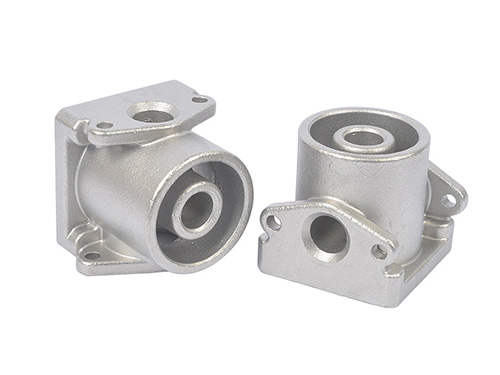
 |  |  |
 |  |  |
 |  |  |
 |  |  |
Casting is a fundamental manufacturing process that involves melting metal or alloy materials,pouring the molten material into a prefabricated mold cavity,and allowing it to solidify to form components with desired shapes and dimensions.Renowned for its ability to produce complex geometries,large-sized parts,and near-net-shape components,casting is widely used across industries—automotive,aerospace,energy,industrial machinery,and consumer goods.From engine crankshafts and turbine rotors to sewing machine housings and battery structural components,casting enables cost-effective production of parts with diverse mechanical properties,leveraging materials ranging from ferrous alloys(steel,cast iron)to non-ferrous metals(aluminum,copper)and composites.This document comprehensively covers casting process classifications,material selection,mold design,quality control,and industry applications,integrating the latest technical innovations and standard specifications.
I.Core Definitions&Functional Roles
1.What Is Casting?
Casting is a material forming process that transforms molten material into solid components via mold cavities,with core functional objectives:
Complex Shape Formation:Produce components with intricate internal/external geometries(e.g.,engine blocks,turbine blades)that are difficult or impossible to achieve via machining or forging.
Near-Net-Shape Production:Minimize post-processing(machining,grinding)by achieving final part dimensions with high precision,reducing material waste and production costs.
Material Versatility:Accommodate diverse materials(ferrous,non-ferrous,composites)and alloy systems,tailoring mechanical properties(strength,ductility,corrosion resistance)to application requirements.
Cost-Effectiveness:Enable mass production of large batches(e.g.,automotive parts)or one-off production of large-sized components(e.g.,industrial machine bases)at competitive costs.
Structural Integrity:Achieve uniform material distribution and controlled solidification to ensure component durability,fatigue resistance,and performance under operational loads.
2.Key Performance Benchmarks
Casting processes and cast components must meet rigorous performance criteria to ensure quality and reliability:
Dimensional Precision:Dimensional tolerance±0.1mm(precision casting)or±1mm(sand casting);surface roughness Ra≤3.2μm(investment casting)or Ra≤25μm(sand casting).
Mechanical Properties:Tensile strength≥200MPa(aluminum castings)or≥600MPa(steel castings);elongation≥5%(ductile cast iron);fatigue life≥10⁶cycles(critical components).
Defect Control:Porosity≤2%(volume fraction);no cracks,shrinkage cavities,or inclusions(size≤0.5mm for precision components).
Material Uniformity:Chemical composition variation≤±0.1%(alloying elements);hardness variation≤±5HRC across the component.
Environmental Adaptability:Corrosion resistance≥500 hours(salt spray test for steel castings);temperature resistance up to 1200℃(superalloy castings for turbines).
Safety Compliance:Meet industry-specific standards(e.g.,AMS 2175 for aerospace castings;ISO 9001 for automotive castings)and non-destructive testing requirements.