
-
E-mail:
18333041899@163.com -
Tel:
86-18333041899
E-mail:
18333041899@163.comTel:
86-18333041899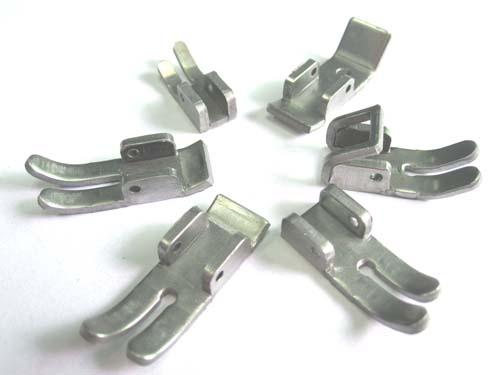
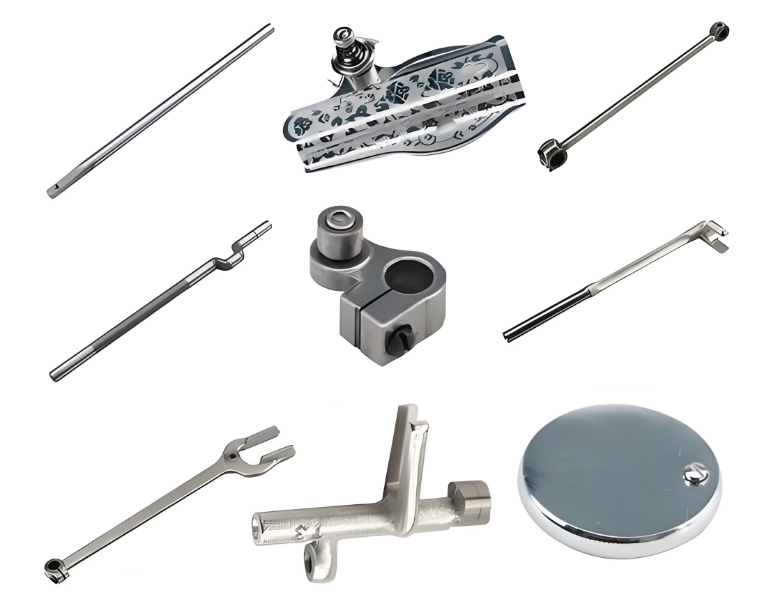
Sewing machine accessories are specialized functional and structural components designed to enhance the versatility,precision,and efficiency of sewing machines—covering industrial-grade production lines,professional tailor equipment,and household sewing tools.These accessories range from core stitching elements(needles,presser feet)to auxiliary mechanisms(bobbin cases,feed dogs)and specialized attachments(embroidery hoops,piping feet),each tailored to specific fabric types(cotton,leather,silk)and sewing techniques(straight stitching,zigzag,quilting).Engineered for durability,wear resistance,and seamless compatibility,sewing machine accessories leverage precision manufacturing processes(stamping,CNC machining,injection molding)and materials(high-carbon steel,titanium alloy,engineering plastics)to meet stringent industry standards.This document comprehensively covers accessory classification,material selection,manufacturing technologies,performance requirements,and application scenarios,integrating the latest technical innovations and standard specifications.
I.Core Definitions&Functional Roles
1.What Are Sewing Machine Accessories?
Sewing machine accessories refer to detachable or integrated components that complement the base sewing machine,extending its functionality or optimizing performance.Their core functional roles include:
Stitching Precision:Ensure consistent stitch formation(length,tension,density)across different fabrics and sewing patterns.
Fabric Handling:Guide,secure,or feed fabrics smoothly through the machine(e.g.,presser feet,feed dogs)to prevent slippage or distortion.
Versatility Enhancement:Enable specialized sewing techniques(embroidery,quilting,piping)or adapt to unique fabric properties(thick leather,delicate silk).
Efficiency Improvement:Reduce setup time,minimize thread breakage,and automate repetitive tasks(e.g.,automatic thread cutters,bobbin winders).
Durability&Wear Resistance:Withstand high-speed sewing(up to 5,000 stitches per minute for industrial machines)and repeated use without performance degradation.
2.Key Performance Benchmarks
Sewing machine accessories must meet rigorous performance criteria to balance precision,durability,and compatibility:
Stitching Precision:Stitch length tolerance±0.1mm;needle hole alignment accuracy±0.05mm(to prevent thread breakage).
Wear Resistance:Needle tip hardness≥HRC 60;presser foot surface wear≤0.01mm after 100,000 stitches.
Compatibility:Fit standard machine models(ISO 4915 for needle shanks;JIS B 7502 for presser feet dimensions).
Speed Adaptability:Support sewing speeds up to 1,500 stitches per minute(household)or 5,000 stitches per minute(industrial).
Fabric Compatibility:Handle fabric thicknesses from 0.1mm(silk)to 10mm(leather)without jamming or fabric damage.
Safety Compliance:Meet EN 60335(electrical safety for household accessories)and ISO 105-X12(colorfastness for plastic/metal components).
II.Core Classification of Sewing Machine Accessories
Sewing machine accessories are categorized by function and application,with distinct designs for household,professional,and industrial use:
1.Core Stitching Components
The critical elements directly involved in thread formation and fabric penetration:
1.1 Sewing Needles
Design Features:
Material:High-carbon steel(HCS,for general use),titanium-coated steel(for durability),or tungsten carbide(for leather/fiberglass).
Structure:Sharp point(for woven fabrics),ball point(for knits),or wedge point(for leather);shank type(flat,round,or cylindrical)matching machine models.
Dimensions:Needle size 60/8(delicate fabrics)to 120/19(heavy materials);eyelet diameter 0.5–1.2mm(thread compatibility).
Core Performance:
Tensile strength≥2,000MPa;bending resistance≥15N(no deformation under fabric pressure).
Titanium coating reduces friction by 30%vs.uncoated steel;service life≥50,000 stitches.
Typical Applications:All sewing machines—HCS needles for cotton/linen;titanium needles for denim;tungsten carbide needles for leather.
Manufacturing Processes:Wire drawing(steel wire diameter tolerance±0.005mm),grinding(needle tip angle 10–15°),heat treatment(quenching+tempering to HRC 60–65),and coating(titanium nitride,thickness 2–5μm).
1.2 Bobbins&Bobbin Cases
Design Features:
Material:Plastic(PP/ABS,household use)or steel(industrial use);bobbin case made of hardened steel(GCr15)with precision adjustment screws.
Structure:Cylindrical bobbin with flanged ends(diameter 11–15mm,height 6–10mm);bobbin case with tension spring(adjustable thread tension 0.5–5N).
Core Performance:
Bobbin thread capacity 50–200m(depending on size);bobbin case tension variation≤±0.2N.
Steel bobbins withstand rotational speeds up to 5,000 rpm(industrial machines)without warping.
Typical Applications:Household sewing machines(plastic bobbins),industrial lockstitch machines(steel bobbins),embroidery machines(high-capacity bobbins).
Manufacturing Processes:Injection molding(plastic bobbins,tolerance±0.02mm),stamping(steel bobbins),CNC turning(bobbin cases),and heat treatment(bobbin case hardness HRC 55–60).
2.Fabric Handling Accessories
Components that guide,secure,or feed fabrics during sewing:
2.1 Presser Feet
Design Features:
Material:Aluminum alloy(lightweight),steel(industrial use),or Teflon-coated steel(non-stick for sticky fabrics like vinyl).
Types:Universal foot(straight/zigzag stitching),zipper foot(zipper installation),buttonhole foot(automatic buttonholes),quilting foot(even fabric feeding),and piping foot(piping/trim application).
Structure:Flat base(for woven fabrics)or grooved base(for knits);adjustable pressure(0.5–5kg)via machine lever.
Core Performance:
Teflon coating friction coefficient≤0.15(prevents fabric sticking);presser foot pressure uniformity±0.2kg.
Compatibility with stitch widths up to 7mm(zigzag feet)and fabric thicknesses up to 10mm(heavy-duty feet).
Typical Applications:Household sewing(universal/zipper/buttonhole feet),professional quilting(quilting feet),industrial garment production(non-stick/heavy-duty feet).
Manufacturing Processes:Die casting(aluminum feet),stamping(steel feet),CNC machining(foot base flatness≤0.01mm),and coating(Teflon,thickness 10–20μm).
2.2 Feed Dogs&Throat Plates
Design Features:
Feed Dogs:Steel(GCr15)with serrated teeth(3–5 teeth per row)for grip;adjustable height(0.1–1mm)to match fabric thickness.
Throat Plates:Steel or plastic with needle hole(diameter 1.5–3mm)and feed dog slots;marked stitch guides for alignment.
Core Performance:
Feed dog tooth hardness≥HRC 58;wear resistance≤0.01mm after 500,000 stitches.
Throat plate needle hole alignment accuracy±0.05mm(prevents needle breakage).
Typical Applications:All sewing machines—standard feed dogs for woven fabrics;differential feed dogs for knits;heavy-duty feed dogs for leather.
Manufacturing Processes:Stamping(feed dog teeth,precision±0.02mm),CNC grinding(throat plate flatness≤0.005mm),and surface treatment(electroplating for corrosion resistance).