
-
E-mail:
18333041899@163.com -
Tel:
86-18333041899
E-mail:
18333041899@163.comTel:
86-18333041899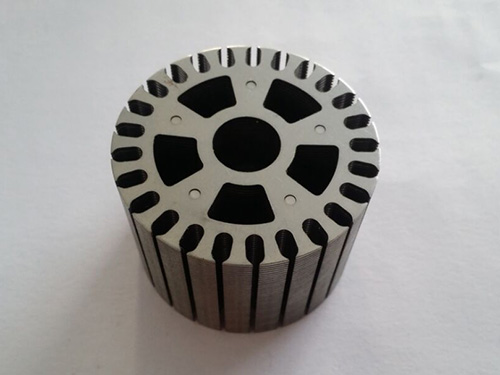
 |  |  |
 |  |  |
 |  |  |
A rotor is a critical rotating component designed to convert energy(mechanical,electrical,or thermal)into rotational motion,serving as the"power core"of motors,engines,turbines,and precision machinery.Characterized by high rotational speed,structural rigidity,and dynamic balance,rotors must withstand extreme centrifugal forces,thermal stress,and wear while maintaining dimensional stability and energy conversion efficiency.Engineered for diverse applications—from automotive electric motors and industrial turbines to aerospace engines and consumer electronics—rotors leverage advanced materials(alloy steels,composites,permanent magnets)and precision manufacturing processes(CNC machining,forging,lamination)to meet stringent performance requirements.This document comprehensively covers rotor classification,material selection,manufacturing technologies,performance benchmarks,and industry applications,integrating the latest technical innovations and standard specifications.
I.Core Definitions&Functional Roles
1.What Is a Rotor?
A rotor refers to the rotating part of a mechanical or electrical system,typically consisting of a central shaft,structural body,and functional elements(magnets,blades,or windings).Its core functional roles include:
Energy Conversion:Convert electrical energy to mechanical energy(motor rotors)or mechanical energy to electrical energy(generator rotors);transform thermal energy to rotational motion(turbine rotors).
Power Transmission:Transfer torque and rotational motion to connected components(e.g.,drivetrain,pumps,or fans)with minimal energy loss.
Dynamic Stability:Maintain balanced rotation at high speeds(up to 100,000 rpm for precision motors)to avoid vibration and structural failure.
Functional Adaptability:Integrate specialized elements(permanent magnets,impeller blades,or combustion chambers)to match application-specific requirements.
2.Key Performance Benchmarks
Rotors must meet rigorous performance criteria to ensure reliability,efficiency,and safety across operating conditions:
Rotational Speed:Range from 100 rpm(industrial pumps)to 200,000 rpm(gas turbines);EV motor rotors typically operate at 10,000–20,000 rpm.
Structural Strength:Tensile strength≥800MPa(shaft materials);fatigue life≥10⁷cycles under rated speed and load.
Dynamic Balance:Imbalance tolerance≤0.05 g·cm/kg(precision motors);vibration amplitude≤0.1 mm at maximum speed.
Thermal Stability:Operating temperature range-40℃to 600℃(engine rotors)or-40℃to 200℃(EV motor rotors);thermal expansion coefficient≤15×10⁻⁶/℃.
Energy Efficiency:Motor rotor efficiency≥90%(EV traction motors);turbine rotor energy conversion efficiency≥85%(industrial turbines).
Corrosion Resistance:Salt spray test≥500 hours(outdoor applications);resistance to automotive fluids(oil,coolant)for vehicle rotors.
II.Core Classification of Rotors
Rotors are categorized by application,energy type,and structural design,with distinct configurations for motors,engines,turbines,and precision machinery:
1.Electric Motor Rotors
The rotating component of electric motors(EV traction motors,industrial motors,consumer electronics motors)that generates rotational motion via electromagnetic interaction:
1.1 Permanent Magnet(PM)Rotors
Design Features:
Material:Neodymium-iron-boron(NdFeB)permanent magnets(remanence≥1.2T,coercivity≥1000 kA/m)or samarium-cobalt(SmCo)magnets(high-temperature resistance);rotor core made of silicon steel laminations(0.35–0.5mm thickness)to reduce eddy current loss.
Structure:Surface-mounted PM(SPM)rotors(magnets bonded to rotor surface)or interior PM(IPM)rotors(magnets embedded in rotor core)—IPM design offers higher torque density and mechanical stability.
Shaft:Forged alloy steel(42CrMo,20CrMnTi)with CNC-machined splines or keyways(dimensional tolerance±0.01mm).
Core Performance:
Torque density≥4 N·m/kg(EV traction motors);power density≥3 kW/kg;efficiency≥90%(high-performance motors).
Rotational speed up to 20,000 rpm(EV motors);magnet retention force≥10,000 N(resists centrifugal force).
Typical Applications:EV traction motors(Tesla Model 3’s IPM rotor),hybrid vehicle motors,industrial servo motors,drones.
Manufacturing Processes:
Lamination stamping:Silicon steel sheets stamped with precision dies(tolerance±0.02mm)and stacked(lamination factor≥0.95).
Magnet assembly:Bonding(epoxy adhesive,shear strength≥15MPa)or shrink-fitting magnets to rotor core;laser welding for SPM rotor retention sleeves.
Shaft machining:CNC turning/milling(shaft diameter tolerance±0.005mm),heat treatment(quenching+tempering,HRC 35–45),and dynamic balancing.