
-
E-mail:
18333041899@163.com -
Tel:
86-18333041899
E-mail:
18333041899@163.comTel:
86-18333041899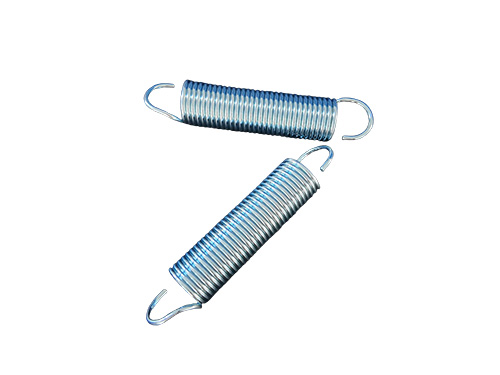
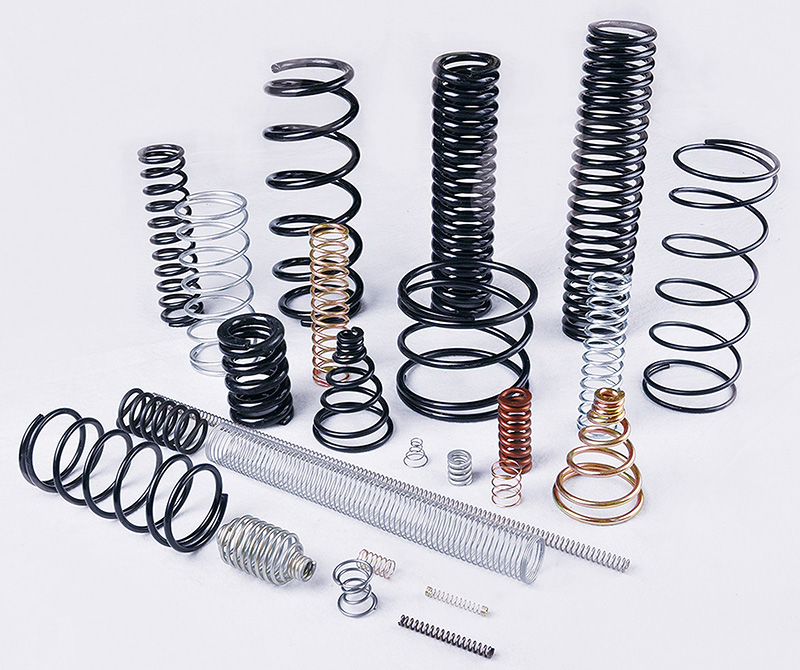
Spring parts are elastic mechanical components designed to store and release mechanical energy,absorb shock,or maintain a predetermined force or position when subjected to deformation(compression,tension,torsion,or bending).Characterized by their ability to return to their original shape after removing external loads,these components are indispensable in automotive,aerospace,electronics,industrial machinery,and consumer goods industries.Leveraging precision manufacturing processes and diverse materials,spring parts cater to needs ranging from micro-precision force control(electronic devices)to heavy-duty shock absorption(industrial equipment).
I.Core Definitions&Material Selection
1.What Are Spring Parts?
Spring parts are flexible mechanical elements with elastic properties,typically featuring a coil,leaf,or custom-shaped structure.Key functional characteristics include:
Elastic deformation:Withstands compression,tension,torsion,or bending without permanent damage(elastic limit≥1.5×working load).
Force control:Provides consistent restoring force(linear or non-linear)based on design requirements(spring rate 0.1–1000 N/mm).
Dimensional stability:Maintains shape and performance under cyclic loading(fatigue life≥10⁶cycles for standard applications).
Environmental adaptability:Resists temperature fluctuations,corrosion,and wear in diverse operating conditions.
2.Common Materials for Spring Parts
Materials are selected based on mechanical requirements(strength,elasticity,fatigue resistance),environmental conditions(temperature,corrosion),and application scenarios:
Metal Alloys(Primary Materials):
Spring Steel(65Mn,55Si2Mn,60Si2CrA):High elastic limit(≥1200 MPa),excellent fatigue resistance—used for general-purpose springs(compression,tension,torsion).Surface treatments include quenching+tempering(hardness HRC 45–55),galvanizing,or phosphating(salt spray test≥48 hours).
Stainless Steel(304,316,17-7PH):Corrosion-resistant,temperature tolerance(-200℃to 300℃)—ideal for medical devices,food processing equipment,and outdoor applications.
Titanium Alloy(Ti-6Al-4V):High strength-to-weight ratio,corrosion-resistant—for aerospace,marine,and high-performance machinery(weight reduction 40%vs.steel).
Copper Alloys(Brass,Phosphor Bronze,Beryllium Copper):Good electrical conductivity,corrosion resistance—used for electrical contacts,precision instruments,and low-load springs(elastic limit≥800 MPa).
Polymer Materials(Specialized Applications):
Nylon,PEEK,Silicone:Lightweight,corrosion-resistant,non-metallic—for low-force,noise-dampening springs(electronic devices,medical tools).
Composite Materials(Fiber-Reinforced Polymers):High strength,fatigue resistance—for aerospace and automotive lightweight designs.
II.Core Types&Structural Designs
Spring parts are categorized by structural shape and functional purpose,with distinct designs for specific force requirements:
1.Coil Springs(Helical Springs)
Compression Coil Springs:
Structure:Helical wound wire(diameter 0.1–50mm)with open or closed ends(ground or unground),pitch varying by load requirements.
Core Performance:Spring rate 0.5–500 N/mm,load capacity 1N–50kN,working temperature-50℃to 250℃(steel)or-200℃to 300℃(stainless steel).
Typical Applications:Automotive suspension systems,industrial machinery buffers,electronic device buttons,and valve actuators.
Tension Coil Springs:
Structure:Helical wound wire with hooks/eyes at both ends(loop,hook,or threaded end),designed to resist stretching.
Core Performance:Spring rate 0.1–200 N/mm,load capacity 0.5N–20kN,fatigue life≥10⁶cycles.
Typical Applications:Garage door mechanisms,medical devices(inhalers),agricultural machinery,and textile equipment.
Torsion Coil Springs:
Structure:Helical wound wire designed to resist torsion(rotational force),with legs at both ends for torque transmission.
Core Performance:Torque range 0.1–1000 N·m,angular deflection 0–180°,working temperature-50℃to 250℃.
Typical Applications:Door hinges,automotive seat adjusters,clock mechanisms,and power tool clutches.
2.Leaf Springs
Structure:Multiple layers of flat steel strips(thickness 1–10mm,width 10–100mm)stacked and bolted together,curved to provide compression/tension elasticity.
Types:Single-leaf(light load),multi-leaf(heavy load),and parabolic leaf springs(automotive suspension).
Core Performance:Load capacity 5–500kN,deflection range 5–100mm,fatigue life≥5×10⁵cycles(automotive applications).
Typical Applications:Truck/bus suspension systems,agricultural machinery,industrial presses,and railway rolling stock.
3.Specialized Spring Parts
Disc Springs(Belleville Washers):
Structure:Conical disc-shaped steel sheets(thickness 0.5–20mm,outer diameter 10–200mm),stacked for variable load capacity.
Core Performance:Load capacity 1kN–100kN,deflection≤20%of thickness,suitable for high-pressure applications(corrosion resistance via zinc/nickel plating).
Typical Applications:Bolted joint preload,hydraulic valves,and industrial machinery shock absorption.
Wave Springs:
Structure:Thin sheet metal(0.1–2mm)stamped into wave-shaped rings(diameter 5–100mm),offering high load capacity in limited space.
Core Performance:Spring rate 0.2–50 N/mm,compression ratio 1:3(space-saving vs.coil springs),working temperature-40℃to 200℃.
Typical Applications:Electronic devices(smartphones,laptops),automotive transmissions,and bearing preload systems.
Custom-Shaped Springs:
Structure:Wire or sheet metal formed into unique shapes(clips,torsion bars,flat springs)via bending,stamping,or coiling—tailored to specific mechanical needs.
Core Performance:Load capacity 0.1N–10kN,fatigue life≥10⁵cycles,material selection based on application(e.g.,beryllium copper for electrical clips).
Typical Applications:Electrical connectors,medical instruments,household appliances,and aerospace components.
III.Manufacturing Processes for Spring Parts
Spring parts require precision manufacturing to ensure elastic performance and dimensional accuracy:
Wire Forming(Coil Springs):
Wire drawing:Raw wire(steel,stainless steel)drawn to precise diameter(tolerance±0.01mm)via diamond dies.
Coiling:CNC spring coiling machines(precision±0.02mm)form wire into helical shapes—compression springs with closed/ground ends,tension springs with hooks.
Heat treatment:Quenching(850–950℃)+tempering(400–550℃)to enhance elastic limit and fatigue resistance.
Surface treatment:Galvanizing,phosphating,powder coating,or passivation(stainless steel)to improve corrosion resistance.
Sheet Metal Forming(Leaf/Wave/Disc Springs):
Stamping:CNC stamping machines(tolerance±0.05mm)cut sheet metal into blanks(disc springs,wave springs)or shape flat springs.
Bending:Precision bending(angle tolerance±0.5°)for leaf springs and custom-shaped flat springs.
Heat treatment:Annealing(for sheet metal)and quenching/tempering to achieve desired hardness(HRC 40–55).
Surface finishing:Painting,galvanizing,or chrome plating(for leaf springs)to resist wear and corrosion.
Finishing&Quality Control:
Shot peening:Bombarding spring surface with steel shot to improve fatigue resistance(extend life by 30–50%).
Stress relieving:Heat treatment(200–300℃)to eliminate residual stress from forming.
Dimensional inspection:Coordinate Measuring Machines(CMM)verify diameter,pitch,and length(tolerance±0.02mm);force testing machines validate spring rate and load capacity.
IV.Core Advantages&Performance Features
Elastic Energy Storage:Converts external force into elastic energy for release(e.g.,valve springs in engines,shock absorbers in vehicles).
Shock&Vibration Absorption:Reduces impact forces(e.g.,leaf springs in trucks,disc springs in industrial presses)and dampens vibrations(e.g.,wave springs in electronics).
Force&Position Maintenance:Provides consistent force(e.g.,tension springs in door latches)or maintains component position(e.g.,bearing preload wave springs).
Space-Saving Design:Wave springs,disc springs,and custom-shaped springs offer high performance in limited installation space(50%smaller than traditional coil springs).
Durability&Reliability:High fatigue resistance(≥10⁶cycles for standard springs)and corrosion resistance(stainless steel,titanium alloys)ensure long service life.
V.Typical Application Scenarios
Spring parts are integral to nearly all mechanical systems,with key applications including:
Automotive Industry:Suspension leaf springs,valve springs,clutch springs,seat adjuster torsion springs,and transmission wave springs—critical for ride comfort and performance.
Aerospace&Defense:Titanium alloy coil springs(aircraft landing gear),torsion springs(missile guidance systems),and custom-shaped springs(satellite components)—withstanding extreme temperatures and loads.
Electronics&Electrical:Wave springs(smartphone cameras),beryllium copper contact springs(connectors),and compression springs(laptop keyboards)—enabling precision and miniaturization.
Industrial Machinery:Heavy-duty compression springs(presses),disc springs(hydraulic valves),and leaf springs(agricultural equipment)—absorbing shock and maintaining load stability.
Medical Devices:Stainless steel torsion springs(surgical instruments),phosphor bronze compression springs(inhalers),and custom clips(catheters)—meeting biocompatibility and precision requirements.
Consumer Goods:Compression springs(mattresses,door handles),tension springs(garage doors),and flat springs(household appliances)—enhancing functionality and user experience.
VI.Quality Control&Selection Criteria
1.Quality Assurance Measures
Mechanical Testing:
Spring rate testing:Verify force-deflection characteristics(tolerance±5%of design value).
Fatigue testing:Cyclic loading(10⁶–10⁷cycles)to ensure no failure under working conditions.
Elastic limit testing:Ensure no permanent deformation after maximum load(1.2×rated load).
Material Compliance:
Steel springs meet ASTM A228/A229(spring steel),stainless steel springs meet ASTM A313(stainless steel wire).
Biocompatible materials(316L stainless steel,titanium)for medical applications(ISO 10993 certification).
Dimensional Accuracy:
Wire diameter,coil pitch,length,and deflection measured via CMM(tolerance±0.02mm for precision springs).
Surface inspection:No cracks,burrs,or corrosion(visual inspection+magnetic particle testing for steel springs).
2.Selection Guidelines
Load&Deflection Requirements:Calculate spring rate(N/mm)and maximum deflection based on application—e.g.,high spring rate for heavy machinery,low rate for electronic devices.
Material Matching:
Corrosion-prone environments(outdoor,medical):316 stainless steel or titanium alloy.
High-temperature applications(engines,industrial ovens):Inconel or high-temperature spring steel.
Electrical conductivity needs:Beryllium copper or phosphor bronze.
Space Constraints:Choose wave springs,disc springs,or thin flat springs for limited installation space;coil springs for standard applications.
Environmental Conditions:Temperature range(-200℃to 500℃),humidity,and chemical exposure(e.g.,oil-resistant materials for automotive transmissions).
VII.Future Development Trends
Advanced Materials:Development of high-strength,lightweight alloys(e.g.,titanium-nickel shape memory alloys)for smart springs that adapt to temperature changes.
Miniaturization:Micro-springs(wire diameter≤0.1mm)for wearable electronics,medical implants,and semiconductor equipment—enabling further device miniaturization.
Smart Features:Integration of sensors(strain gauges)into springs for real-time load monitoring(automotive suspension,industrial machinery).
Sustainability:Use of recycled steel and stainless steel,plus eco-friendly surface treatments(chromium-free plating)to reduce environmental impact.
Customization:3D-printed springs(metal powder bed fusion)for complex shapes and low-volume,high-precision applications(aerospace,medical devices).
Spring parts are the unsung heroes of mechanical engineering,enabling functionality,safety,and performance across industries.As materials science and manufacturing technologies advance,spring parts continue to evolve—offering higher precision,durability,and versatility.Whether for heavy-duty industrial machinery or micro-precision electronic devices,selecting the right spring part(based on material,design,and performance requirements)is critical to ensuring system reliability and efficiency.