
-
E-mail:
18333041899@163.com -
Tel:
86-18333041899
E-mail:
18333041899@163.comTel:
86-18333041899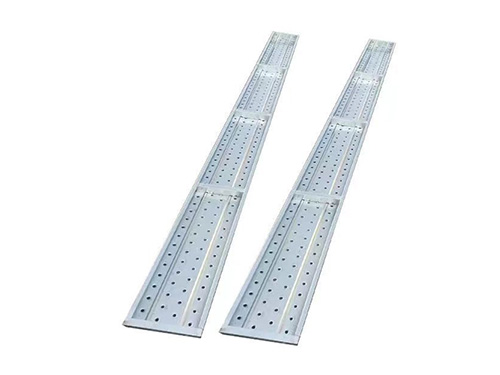
A scaffolding pedal, also called a scaffolding walk board, is a vital component for high-altitude construction work. It serves as a walking surface and temporary platform for workers to stand, move, and place tools and materials. Here is a detailed introduction to it from aspects like material types, core features, quality requirements, and application scenarios:
Common Material Types
Steel pedals: Now widely used in construction, they are often made of hot-dip galvanized steel or carbon steel with punching structures. The 2025 new model takes 40×40mm hot-dip galvanized square tubes as the base, with a 2.5mm thickness. It can bear up to 300kg/㎡, far exceeding the industry standard of 150kg/㎡. Their advantages include high load-bearing capacity, low cost, and long service life. Some are designed with honeycomb holes, which reduce weight while facilitating drainage and preventing slipping on rainy days. However, ordinary carbon steel varieties are prone to rust if not treated properly.
Aluminum pedals: Characterized by being lightweight and corrosion-resistant, they are easy to carry and assemble. Some are designed with anti-slip patterns on the surface. They are suitable for scenarios requiring frequent movement of scaffolding, such as temporary maintenance operations. But their load-bearing capacity is relatively weak, with some models only able to bear 180kg/㎡, making them unsuitable for heavy-duty operations.
Fiberglass (FRP) pedals: They have the advantages of corrosion resistance, insulation, and not being easy to warp or rust. They are often used in special environments like offshore oil rigs or electrical maintenance sites where insulation and corrosion resistance are required. However, compared with metal pedals, their overall firmness is slightly insufficient, and the cost is relatively high.
Traditional wooden/bamboo pedals: Made of high-density pine or plywood, they were once commonly used due to easy access to materials. But they have poor load-bearing capacity, are prone to warping, cracking, and rotting after being exposed to the sun and rain for a long time, and have high safety risks. They are now gradually being eliminated in formal large-scale construction projects.
Core Design Features
Anti-slip and anti-loose designs: Many modern pedals adopt hook rivet structures. For example, some steel pedals have 16 thickened U-shaped hook nails densely distributed on the edge, which are embedded in the steel plate through cold extrusion technology to avoid loosening and falling off. The surface punching or anti-slip texture design also effectively improves the anti-slip performance.
Modular and easy-to-assemble structures: Most pedals support modular splicing, which can be freely combined into platforms of different sizes to adapt to scaffolding systems of various heights and widths. Besides, they are equipped with galvanized steel hooks that can be firmly connected to the scaffolding frame, and the installation and disassembly are convenient.
Corrosion-resistant treatment: Steel pedals usually undergo hot-dip galvanizing or electrostatic spraying treatment, which can improve corrosion resistance by more than 60%. This allows them to resist wind, rain, and other environmental erosion during long-term outdoor use.
Strict Quality and Safety Standards
Load-bearing compliance: Qualified scaffolding pedals must meet national or industry load-bearing standards. For instance, the Chinese standard GB/T 18482 - 2023 has relevant regulations on their load-bearing capacity, and the dynamic operation load is generally recommended to be controlled within 200kg.
Process inspection: In the production process, strict quality inspection is required. For example, some manufacturers implement three - level inspections including production line testing, warehousing testing, and pre-loading testing. They also strictly control the welding process and the tolerance range of components to avoid quality problems such as weak welding and component size deviation.
Matching safety accessories: When in use, it is usually necessary to match toe boards. These boards are installed at the base of the pedal platform to prevent tools and debris from falling and protect workers' safety. In addition, they need to be used together with scaffolding fixing buckles to avoid displacement.
Typical Application Scenarios
It is widely used in various construction scenarios such as building construction, curtain wall installation, and high-altitude maintenance. For example, in bricklaying work of buildings, it is matched with supported scaffolding for use; in high-rise building exterior wall cleaning and painting, it is used together with suspended scaffolding.
It can also be applied to non-construction fields such as bridge inspection and ship maintenance. For example, when inspecting irregular bridge structures, it can form a temporary operation platform to help workers carry out maintenance and detection work safely.